The University of Georgia College of Agricultural and Environmental Sciences
Georgia FACES SEARCH STORIES:  
"News to use about Georgia Family, Agricultural, Consumer & Environmental Sciences"    November 22, 2009


  Calendar
  Economics
  Environment
  Home and Garden
  Lifestyles
  Science
  State & Region

The University of Georgia
UGA Home
CAES Home
GA FACES Home
 
Latest News
Media Resources
Tips & Trivia
Q&A
Special Info Sites
Images
Infographics
Other News
Search Archives
 
Subscribe Me!
About Us
Contact Us
   
 
May 3, 2002
 
UGA Finding Could Revolutionize Genetic Research
 
A UGA finding can slash the cost of sequencing entire genomes.
 
Sometimes the genius of a discovery lies in how its parts are put together. University of Georgia scientists have combined technologies in a unique way that could revolutionize genetic research, saving countless time and hundreds of millions of dollars.
Complete Story
Photo: Dan Peterson
A standard genomic library (A) contains highly repetitive (blue), moderately repetitive (yellow) and single or low-copy (red) DNA sequences. If clones were collected and sequenced at random from this library, most resources would go toward sequencing the same HR sequences over and over. In CBCS (B), the HR, MR and SL components of a genome are broken down into separate populations.
The discovery? Bring back a once-important but now rarely used molecular technique and combine it with newer cloning and DNA sequencing methods. The effect is a dramatic leap in efficiency.

"It can reduce the cost of sequencing entire genomes by 50 to 95 percent," said Andrew Paterson, director of the UGA Plant Genome Mapping Laboratory and a professor of crop and soil sciences, botany and genetics.

Staggering Savings

That kind of savings could be staggering. Sequencing the sorghum genome, used as an example to develop the new C ot-based Cloning and Sequencing (CBCS) method, would cost about $7.5 million, compared to $20 million with the current "shotgun" approach.

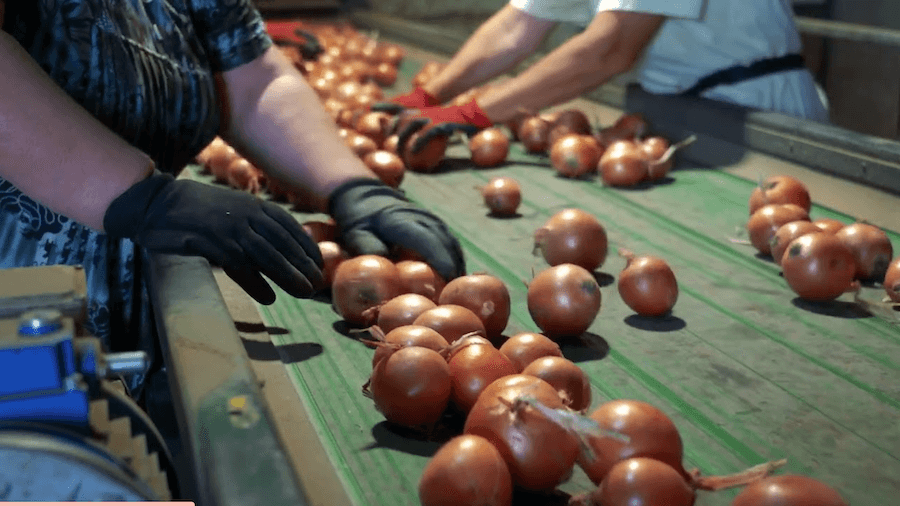
The difference is in the number of clones required to be sequenced. Sequencing the onion genome would require 119 million clones. CBCS slashes that to 15 million, eliminating the immense time and $354 million in funding required to do the other 104 million. For the sugar pine, CBCS cuts 281 million required clones to 60 million, knocking down costs by $750 million.

The thing that drives up the time and cost to sequence a genome is its vast number of relatively meaningless DNA sequences.

Genetic Junk

"Repetitive sequences complicate all aspects of gene and genome research," Paterson said.

These highly repetitive sequences are, in essence, genetic junk, said Daniel Peterson, research coordinator of the Plant Genome Mapping Lab. There may be thousands, even millions, of copies of a single sequence. For example, one such sequence is repeated nearly a million times in the human genome, accounting for nearly 10 percent of human DNA.

"Most of these are ancient viruses," Peterson said. "They're 'selfish DNA,' making up much of the bulk of a genome but adding nothing to its genetic complexity."


Photo: Dan Rahn

Daniel Peterson (left) and Andrew Paterson, key players in a team of 10 University of Georgia scientists, review a presentation of Cot-Based Cloning and Sequencing, their revolutionary new approach to genome research.


Endless Copies

The problem is that to sequence an entire genome, scientists have to wade through these endless copies to get to the genes, which virtually always come in only one or a few copies each.

A technique called Cot analysis makes the savings possible. Developed in the 1960s and widely used in the '70s, it was all but abandoned with the advent of molecular cloning methods. In the late '80s and '90s, research based on Cot analysis bottomed out.

One reason it fell into disuse is that even in the rarefied world of molecular biology, it's a highly demanding process. "You have to be very careful in interpreting the data," Peterson said.

Value of Cot Analysis

Peterson has been an ardent defender of the value of Cot analysis. The method splits the double strands of DNA into single strands, or denatures them, and then allows them under controlled conditions to renature, or recouple into double strands.

Cot analysis breaks down a complex genome into three populations: highly repetitive (HR), moderately repetitive (MR) and single- or low-copy (SL) sequences. It's based on the principle that the more highly repetitive sequences will renature faster. (You could find your date faster at the prom if there were millions of copies of her on the dance floor.)

The Breakthrough

The UGA scientists' breakthrough came when Paterson suggested cloning the separate populations. That made it much easier to separate out, and sequence, the low-copy DNA that includes most of the genes and regulatory ("on-off") switches. "It's like shooting fish in a barrel," Peterson said.

The approach allows researchers to focus their time and funds on the single- and low-copy sequences, which comprise a small part of the genome but virtually all of its information content.

Paterson, Peterson and eight other UGA scientists have published their CBCS findings in a May article in Genome Research. Susan Wessler, who specializes in the HR sequences, is named with Paterson and Peterson in UGA's application for a patent on the CBCS method.


Back to Top
FORMATTED FILES
  View 'Clean' Text File
   
 
AUTHOR
Dan Rahn
College of Agricultural and Environmental Sciences
912-681-5637

(Dan Rahn is a news editor with the University of Georgia College of Agricultural and Environmental Sciences.)

 
SOURCES
Andrew Paterson
706-583-0161
Dan Peterson
706-583-0168


MULTIMEDIA

Graphics included in this story:
  cbcsgraphic.jpg
  AP&DP2s.jpg


Audio
View Script and
Download Audio Clips


Georgia FACES Calendar | Economics | Environment | Home & Garden | Lifestyles | Science | State & Region | Latest News
Media Resources | Tips & Trivia | Q&A | Special Info Sites | Images | Infographics | Other News | Search Archives
UGA Home | CAES Home | GA FACES Home | Subscribe Me! | About Us | Contact Us
"News to use about Georgia Family, Agricultural, Consumer & Environmental Sciences" © 2009 The University of Georgia College of Agricultural and Environmental Sciences
An equal opportunity/affirmative action organization committed to a diverse work force